Tequila is sold in five legal classes, blanco, joven, reposado, añejo and extra añejo, defined by time in oak under Mexico’s tequila standard, NOM-006-SCFI-2012, plus cristalino, which is a filtration treatment and not a class. Separately, every bottle belongs to one of two categories, “Tequila 100% de agave” or plain “Tequila,” which is about what was fermented, not how long it aged. Here is what each class legally requires in the standard’s own words, what the two categories mean, what can be added and how much, how to read the label, the numbers on the industry, the dates behind the rules, and how strong a pour is.
Last verified September 14, 2026. Class and category definitions are quoted from the Consejo Regulador del Tequila’s English translation of NOM-006-SCFI-2012; the US rule is 27 CFR 5.148; production and export figures are the CRT’s, as published by the CRT and by El Informador citing it; standard drinks from NIAAA; calories from USDA FoodData Central. Full list at the end.
Tequila types at a glance
| Class (label) | Legal aging requirement (NOM-006 §4.36) | Container | Mellowing additives allowed |
|---|---|---|---|
| Blanco (Silver, Plata) | None, or less than 2 months in oak or holm oak | Any oak | No: defined “without additives” |
| Joven (Gold, Oro) | Blanco blended with reposado, añejo or extra añejo, or blanco with mellowing additives | Not applicable | Yes |
| Reposado (Aged) | At least 2 months in direct contact with oak or holm oak | No size limit | Yes |
| Añejo (Extra-aged) | At least 1 year in direct contact with oak or holm oak | 600 L or less | Yes |
| Extra Añejo (Ultra-aged) | At least 3 years in direct contact with oak or holm oak | 600 L or less | Yes |
| Cristalino | Not a class. An aged tequila, usually añejo, filtered to remove the color; the label carries the legal class, e.g. “Añejo Cristalino” | Per its class | Per its class |
All classes must be bottled between 35 and 55 percent alcohol by volume under the NOM (Table 1), and at 40 percent or more to be sold in the US (27 CFR 5.148). Mellowing additives are capped at 1 percent of the tequila’s weight before bottling (§6.1.1.1). The word “mixto” does not appear in the standard; the category it describes is simply “Tequila.”
Two categories first: 100% de agave, or Tequila
Before the class comes the category, and it is the more important word on the label. NOM-006 §4.36 defines tequila as the spirit distilled from “the hearts of tequilana weber blue variety Agave,” made “in the manufacturing facilities of an Authorized Producer” inside the protected territory, “wherein said musts may be enhanced and blended together before fermentation with other sugars up to a proportion no greater than 49% of total reducing sugars.” Section 5.1 then splits the product in two:
| Category | Agave sugars | Bottling | NOM section |
|---|---|---|---|
| Tequila 100% de agave | Fermentation “may not be enhanced with sugars other than those obtained from the tequilana weber blue variety Agave grown in the territory” | “Must be bottled in the bottling plant controlled by the Authorized Producer” inside the territory | §5.1.1 |
| Tequila | Musts “may be enhanced and blended together prior to fermentation with other sugars in a proportion not to exceed 49%” | May be shipped in bulk and bottled elsewhere by an approved bottler holding a CRT certificate | §5.1.2, §6.5.4.2 |
So a bottle that says only “Tequila” may be up to 49 percent non-agave sugar by origin and may have been bottled outside Mexico; a bottle that says “100% de agave” (or “100% agave,” “100% puro de agave”) is all blue Weber agave and was bottled at the distillery’s own plant in the territory. In 2025, 100 percent agave accounted for 278.6 million of the 407.8 million liters exported, about 68 percent, per the CRT. Either category can be any of the five classes below.
Blanco (Silver, Plata)
NOM-006 §4.36.1: “Transparent product not necessary colorless, without additives, obtained through distillation, whose commercial alcohol content must be adjusted by dilution with water… possibly having an aging process of less than two months in oak or Encino oak containers.” Two things in that sentence matter. Blanco is the one class defined “without additives,” so the mellowing agents allowed elsewhere (below) are not allowed here. And it may sit in oak for up to two months, so “unaged” is not quite the rule; “under two months” is. It is the base of the Margarita, the Paloma and most other tequila cocktails.
Joven (Gold, Oro)
§4.36.2: “Product resulting of the mix between white Tequila with aged, extra-aged or ultra-aged Tequilas. Also called Tequila joven or gold is the product that results from blending silver Tequila with any of the ingredients listed in section 4.1 in what is known as mellowing.” Joven is therefore made one of two ways: blanco blended with an aged class, or blanco with the permitted additives, and the label does not have to say which. “Gold” is a class, not an age grade, and a gold tequila has not necessarily spent any time in a barrel. This is the class historically used for the Tequila Sunrise.
 Reposado (Aged)
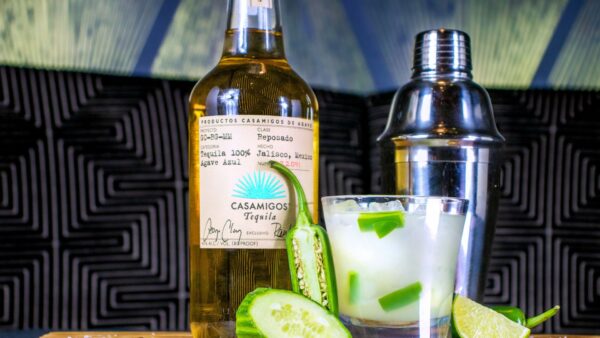
§4.36.3: “A product which may be enhanced by mellowing, subject to an aging process of at least two months in direct contact with the wood of oak or Encino oak (holm or holm oak) containers… The result of blending aged Tequila with extra-aged Tequila is considered aged Tequila.” The standard sets a minimum (two months) and no maximum, and no container size. A reposado can be two months in a 200 L ex-bourbon barrel or most of a year in a vat holding tens of thousands of liters; both are legally reposado, and the label will not tell you which unless the producer chooses to. A reposado blended with añejo is still reposado.
Añejo (Extra-aged)
§4.36.4: “A product that may be enhanced by mellowing, subject to an aging process of at least one year in direct contact with the wood of oak (holm or holm oak) or Encino oak containers with a maximum capacity of 600 liters… The result of blending extra-aged Tequila with ultra-aged Tequila is considered extra-aged Tequila.” The 600 L cap first appears here: a barrel that size or smaller fixes a minimum ratio of wood to liquid, and reposado has no such floor. Aging must be done by the authorized producer inside the territory (§6.4).
 Extra Añejo (Ultra-aged)
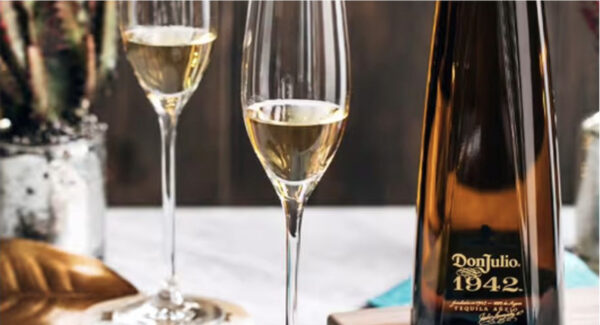
§4.36.5: “A product that may be enhanced by mellowing, subject to an aging process of at least three years, in direct contact with the wood of the oak or Encino oak containers, whose maximum capacity is 600 liters.” The class was added with NOM-006-SCFI-2005, which took effect in 2006; before that, everything over a year was añejo. Three years is the floor and there is no ceiling. Don Julio 1942 is the most widely stocked example; how that bottle came about is here.
Cristalino
The word does not appear in NOM-006. A cristalino is an aged tequila, usually añejo, that has been filtered (typically through activated charcoal) or redistilled to remove the color the barrel gave it; Difford’s Guide’s definition is “aged tequilas that have been charcoal filtered or redistilled to remove the amber hue imparted by oak during maturation.” The bottle must still carry its legal class, so Don Julio 70, the first one, is labeled “Añejo Cristalino” and described by its producer as “aged… for 18 months in American white oak barrels, then carefully charcoal filtered.” Diageo announced it on September 13, 2011 as “el primer Añejo Claro del mundo,” for the seventieth anniversary of Don Julio González’s start in 1942. What the filtration removes beyond color is not defined anywhere, and the label cannot tell you.
What can be added: mellowing and the 1 percent rule
NOM-006 §4.1 defines mellowing (abocado) as a “procedure to soften the flavor of the Tequila, through the addition of one or more of the following ingredients: Caramel coloring; Natural oak or Encino oak extract (holm or holm oak extract); Glycerin; Sugar-based syrup.” Section 6.1.1.1 caps them: “The use of any of the mellowing additives to which section 4.1 of this NOM refers must not be more than 1% in relation to the total Tequila weight before it is bottled.” Joven, reposado, añejo and extra añejo may all be mellowed; blanco may not. Because caramel coloring is on the list, color alone does not prove time in wood. Tequilas with other permitted flavorings or sweeteners are a separate labeled product with their own caps (75 g/L reducing sugars, 85 g/L dry extract) and must declare the flavor on the label.
How to read the label
Section 11.1 of the standard requires every container to carry: the word “Tequila”; the category and class; net content; alcohol content as “% Alc. Vol.”; the name of the Authorized Producer; “HECHO EN MÉXICO” or an equivalent; and the official countersign with the producer’s registration number, the “NOM” number (§10.4). That NOM number identifies the distillery that made it, whatever brand is on the front, so it is the one line on a label that tells you where the liquid came from. Lot code and health warnings are also required.
| Label line | What it tells you |
|---|---|
| “Tequila 100% de agave” or “Tequila” | Category: all agave sugars and bottled at origin, or up to 49% other sugars and possibly bottled abroad |
| Blanco, Joven, Reposado, Añejo, Extra Añejo | Class: minimum time in oak, per the table at the top |
| Cristalino | A descriptor, not a class; look for the class word next to it |
| NOM 1xxx | The registered distillery |
| % Alc. Vol. | 35 to 55 under the NOM; 40 or more for the US |
| Hecho en México | Required; tequila can only be made in the territory |
The territory and the rules, with dates
| Date | Event |
|---|---|
| December 9, 1974 | Mexico publishes the General Declaration of Protection for the Tequila appellation of origin, the country’s first. The territory today is 181 municipalities across Jalisco (all of it) and designated parts of Guanajuato, Michoacán, Nayarit and Tamaulipas. |
| 1979 | Canada and the European Union recognize the appellation (CRT timeline). |
| May 17, 1994 | The Consejo Regulador del Tequila is established and accredited as the certification body; it now issues the transport and export certificates every bottle needs. |
| 2006 | NOM-006-SCFI-2005 takes effect and adds the extra añejo class. |
| September 13, 2011 | Don Julio 70, the first cristalino, is announced. |
| 2012 | NOM-006-SCFI-2012, the current standard. |
| 2017 | United States recognition of the appellation (CRT timeline); 27 CFR 5.148 restates tequila as “a distinctive product of Mexico” that “must be made in Mexico, in compliance with the laws and regulations of Mexico.” |
| 2024 | The CRT counts 57 countries recognizing the appellation, Guatemala the most recent. |
The industry in numbers
| Year | Production (million liters) | Exports (million liters) | Certified brands / producers |
|---|---|---|---|
| 2023 | 598.7 | 399.2 | 2,539 / 198 |
| 2024 | 495.8 | 400.3 (402.7 as later revised) | 2,991 / 206 |
| 2025 | 583.5 | 407.8, of which 278.6 was 100% agave | 3,294 / 220 |
All figures are the CRT’s, as published by the council and reported by El Informador. The 2025 count of registered agave growers was 43,398. In the US, tequila and mezcal together sold 32.1 million 9-liter cases in 2025 for $6.44 billion in supplier revenue (DISCUS).
How strong a pour is
Class does not change the alcohol. The NOM allows 35 to 55 percent ABV for every class, the US requires at least 40, and the label states the figure; a blanco and an extra añejo at the same ABV are the same pour. NIAAA counts one standard drink as 0.6 fl oz of pure alcohol: ounces × ABV ÷ 0.6.
| ABV | Pure alcohol in 1.5 oz | Standard drinks |
|---|---|---|
| 35% (NOM minimum) | 0.525 fl oz | 0.9 |
| 38% | 0.57 fl oz | 0.95 |
| 40% (US minimum) | 0.60 fl oz | 1.0 |
| 55% (NOM maximum) | 0.825 fl oz | 1.4 |
A 1.5 oz pour of 40 percent tequila is about 96 calories (USDA FoodData Central 174815, 80-proof distilled spirits; tequila has no entry of its own). A Margarita at 2 oz tequila and 1 oz of a 40 percent orange liqueur is 2.0 standard drinks. More on reading proof at What Is 80 Proof.
Frequently asked questions
What is the difference between blanco, reposado and añejo? Time in oak. Blanco is under two months (usually none), reposado at least two months, añejo at least one year in barrels of 600 L or less, extra añejo at least three years in the same barrels.
Is gold tequila aged? Not necessarily. Joven (gold) is blanco blended with an aged class, or blanco with permitted coloring and mellowing agents. The label does not have to say which.
What does 100% de agave mean? All of the fermentable sugar came from blue Weber agave grown in the territory, and the tequila was bottled at the producer’s own plant there. Plain “Tequila” may be up to 49 percent other sugars and may be bottled abroad.
Is cristalino a type of tequila? It is a treatment, not a legal class. A cristalino is an aged tequila filtered clear; the label must still show the class, usually añejo.
Can tequila have additives? Reposado, añejo, extra añejo and joven may contain caramel coloring, oak extract, glycerin and sugar syrup up to 1 percent by weight. Blanco is defined without additives.
What is the NOM number? The registration number of the distillery that made the tequila, required on every label. Different brands with the same NOM number come from the same distillery.
Does an older class mean more alcohol? No. All classes are bottled in the same 35 to 55 percent range. At 40 percent, a 1.5 oz pour of any class is one standard drink.
Sources
- NOM-006-SCFI-2012, English translation hosted by the CRT, checked September 14, 2026
- CRT: Appellation of Origin, About us, Our Tequila, 31 years protecting the appellation (May 2025), 2023 figures (March 2024), 2024 figures (March 2025) and 2025 begins with an increase in exports, checked September 14, 2026
- El Informador, citing the CRT: 2023 close (January 2024), 2024 close (January 2025) and 2025 close (January 2026); AM, 100% agave exports 2025, checked September 14, 2026
- eCFR, 27 CFR 5.148, Agave spirits and Tequila, checked September 14, 2026
- Don Julio, Don Julio 70 Cristalino, PR Newswire, Don Julio 70 launch (September 13, 2011) and Difford’s Guide, Tequila classifications, checked September 14, 2026
- DISCUS, 2025 support tables, checked September 14, 2026
- NIAAA, What is a standard drink and USDA FoodData Central 174815, distilled spirits 80 proof, checked September 14, 2026
Saucey delivers blanco, reposado, añejo and extra añejo tequila in as fast as 25 mins in the cities we serve. Order tequila on Saucey.
The fine print
What is available depends on your address. Enter it and we will show you what is in stock nearby: beer, wine, spirits, mixers and snacks. Delivery is $4.99, plus applicable taxes and fees, shown before you order, as fast as 25 minutes in the best case. Alcohol is 21 and up. ID at the door, every time, no exceptions and no negotiating with the driver.