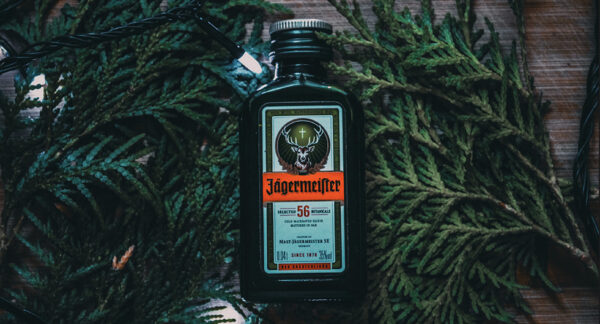
Jägermeister is a Kräuterlikör, a German herbal liqueur, made from 56 botanicals macerated in alcohol, aged in oak for about a year, and bottled at 35% ABV. The recipe has been a company secret since 1934, but the brand has confirmed a few of the ingredients over the years: star anise, licorice root, ginger, juniper, saffron, cinnamon, cardamom and citrus peel among them. Here is how a regional German digestif took forty years and one very good salesman to become an American bar staple.
In Germany it is drunk the way it was designed to be drunk: cold, in a small glass, after dinner, as a digestif. In America it became something else entirely.
The story behind Jägermeister
The liqueur was created by Curt Mast in Wolfenbüttel, in Lower Saxony, and launched in 1935. Mast had inherited his father’s vinegar and wine business and was an avid hunter, which explains the name (Jägermeister means “master hunter,” and was the official title for senior gamekeepers in Germany) and the stag on the label, borrowed from the legend of Saint Hubertus, the patron saint of hunters, who is said to have seen a glowing cross between a stag’s antlers.
For its first four decades Jägermeister was a regional German product with a middle-aged customer base. That changed in 1974, when a New York importer named Sidney Frank noticed it was selling steadily in German-American neighborhoods and secured the US rights. Sales stayed small for another ten years.
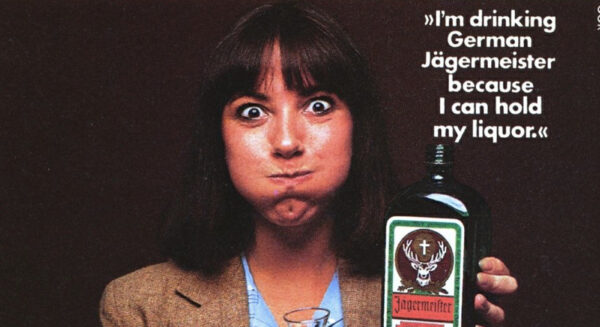
Then, in the mid-1980s, for reasons nobody has ever fully explained, it caught on in the bars of Baton Rouge and New Orleans. Frank read a local newspaper story about the trend, flew to Louisiana, and did two things that turned out to matter. He hired a team of brand ambassadors, the Jägerettes, to work the bars in person, a tactic that was almost unheard of at the time and is now standard across the industry. And he ran a deadpan billboard campaign showing a grimacing man mid-sip under the words “so smooth,” which made a joke of the flavor instead of hiding it.
It worked. Jägermeister spread from Louisiana across the American bar scene through the 1990s, helped by the tap machine that serves it at -18°C, the brand’s heavy metal sponsorships, and the Jägerbomb, the shot-in-a-glass-of-energy-drink combination that the company itself has never officially endorsed. Frank went on to create Grey Goose with the money, and Jägermeister went on to become one of the largest-selling liqueur brands in the world, with a record year in 2022. It is still family-owned, still made in Wolfenbüttel, and still, per the label, made with 56 ingredients.
How it is served
The producer’s own serve is ice cold, at -18°C, from the freezer or the tap machine, in a small glass after a meal. At 35% ABV a 1.5 oz pour is about 0.9 of a US standard drink; a 1 oz shot is about 0.6.
Saucey delivers Jägermeister in as fast as 25 mins in the cities we serve. Order Jägermeister on Saucey.
The fine print
What is available depends on your address. Enter it and we will show you what is in stock nearby: beer, wine, spirits, mixers and snacks. Delivery is $4.99, plus applicable taxes and fees, shown before you order, as fast as 25 minutes in the best case. Alcohol is 21 and up. ID at the door, every time, no exceptions and no negotiating with the driver.