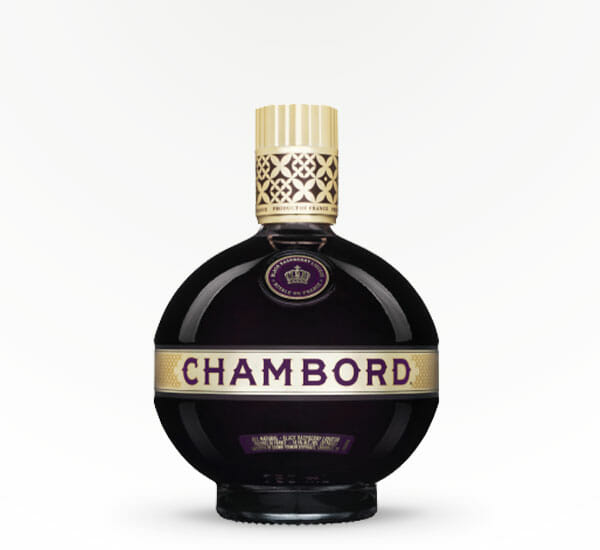
Chambord is a French black raspberry liqueur, bottled at 16.5% ABV, in the round, gold-trimmed bottle you have seen on the back bar. It is the raspberry element in a French Martini, a Kir Royale variation and a long list of sparkling drinks. Here is what is in it, how it is made, where it comes from and how it is used.
What is in it
Chambord is made from whole raspberries and blackberries steeped in French spirits, then blended with black raspberry juice, cognac, Madagascar vanilla, Moroccan citrus peel, honey and spices. The exact recipe is not published. The result is dark purple, sweet but not syrupy, with raspberry up front, vanilla and citrus behind it, and a faint warmth from the cognac.
How it is made
The fruit is macerated in spirit for several weeks, strained, then macerated again in a second batch of spirit for a further two weeks to pull more flavor from the berries. The spent fruit is pressed for its juice and sugar. The two infusions and the juice are then blended with the cognac, vanilla, citrus, honey and spices, and the finished liqueur is bottled at the Brown-Forman facility in Cour-Cheverny, in the Loire Valley.
History
The brand traces its recipe to raspberry liqueurs made in the Loire Valley in the late 1600s, and to a story that one was presented to Louis XIV on a visit to the Château de Chambord, the 16th-century royal hunting lodge a few miles from where the liqueur is made today. The brand has never confirmed that the château is the source of the name, but the timing and the geography make it the obvious guess.
The Chambord brand as it exists now was launched in the early 1980s by the Cooper family of New York and became a fixture of the 1980s and 1990s cocktail scene, largely through the French Martini. Brown-Forman, the Louisville company behind Jack Daniel’s and Woodford Reserve, bought the brand in 2006. In 2010 Brown-Forman added a Chambord-flavored vodka in the same bottle shape, which is still sold in some markets.
How to serve it
Chambord is a liqueur rather than a spirit, so it is sweet enough to drink on its own over ice or as a small after-dinner pour, but most of it goes into cocktails. It works with sparkling wine, with gin and vodka, with ginger beer and lemon-lime soda, and in small amounts in whiskey and rum drinks where a raspberry note fits. A half ounce is usually enough to be tasted; more than an ounce starts to dominate.
Serve it in a clear glass. The color is deep purple-red and is a large part of the appeal.
Chambord cocktails
Chambord Royale
Half an ounce of Chambord in a flute, topped with 4 oz of chilled Champagne or other dry sparkling wine. A raspberry in the glass is the usual garnish. This is the simplest use and the one the brand is best known for.
French Martini
Shake 1.5 oz vodka, 1/2 oz Chambord and 1.5 oz pineapple juice hard with ice and strain into a chilled coupe. The pineapple juice gives it a foamy top. It was created in New York in the 1980s and is the drink that made the brand.
Floradora
A highball from the early 1900s, named after a Broadway musical, originally made with raspberry syrup. With Chambord: 2 oz gin, 1/2 oz Chambord, 1/2 oz fresh lime juice, built over ice in a tall glass and topped with ginger beer. Stir gently and garnish with lime.
Zipper
Equal parts vodka, Chambord and lemon-lime soda over ice, garnished with fresh berries and mint. A 1 oz pour of each makes one drink. It comes out the color of pomegranate juice.
Kir Royale variation
The classic Kir Royale uses crème de cassis; a Chambord version substitutes 1/4 oz of Chambord for the cassis in a flute of sparkling wine and reads slightly sweeter and more raspberry-forward.
The short version
Chambord is a black raspberry liqueur from the Loire Valley, made from macerated raspberries and blackberries, cognac, vanilla, citrus and honey, bottled at 16.5%. It is used in small pours to add raspberry flavor and color to sparkling wine, vodka and gin drinks, and it keeps well on the shelf once opened.
Saucey carries Chambord in several sizes along with the sparkling wine, vodka and gin to go with it, and delivers in as fast as 25 mins in the cities we serve. For similar guides, see What to Mix With Baileys and What to Mix With Bombay Sapphire.
The fine print
What is available depends on your address. Enter it and we will show you what is in stock nearby: beer, wine, spirits, mixers and snacks. Delivery is $4.99, plus applicable taxes and fees, shown before you order, as fast as 25 minutes in the best case. Alcohol is 21 and up. ID at the door, every time, no exceptions and no negotiating with the driver.