Hennessy is cognac. Cognac is a brandy, and brandy is a spirit distilled from fruit, in this case white wine from a defined region around the town of Cognac in western France. That is the whole answer, but each of those words carries rules, in both French and US law, and the rules are what make Hennessy what it is. Here is how it is classified, how it is made, what every bottle in the range is and what the letters on the label mean, how many standard drinks are in a pour, how Hennessy says to serve it, and the numbers behind the biggest cognac house in the world.
Last verified September 13, 2026. US classification from 27 CFR 5.145 and 5.155; cognac age rules from the BNIC as reported by Difford’s Guide, Martell and The Spirits Business; range, history and serving suggestions from hennessy.com and Hennessy’s press site; ownership from LVMH, Diageo and trade press; shipment figures from the BNIC via The Spirits Business and Just Drinks; standard drinks from NIAAA; calories from USDA FoodData Central. Full list at the end.
| Hennessy | Fact |
|---|---|
| Type of alcohol | Cognac: grape brandy distilled in the Cognac region of France (27 CFR 5.145(c)(2)) |
| Made from | White wine, distilled twice in copper pot stills, aged in French oak |
| Producer | Jas Hennessy and Co., Cognac, France, owned by Moët Hennessy (66% LVMH, 34% Diageo) |
| Founded | 1765, by Richard Hennessy, an Irish officer in the French army |
| Strength | 40% ABV (80 proof) for VS, VSOP, XO, Paradis and Richard Hennessy; 43% for Hennessy Black and Master Blender’s Selection |
| Standard drinks in a 1.5 oz pour | 1.0 at 40%; 1.08 at 43% |
| Standard drinks in a 750 mL bottle | 16.9 at 40% |
| Size of the brand | 5.8 million 9-liter cases in 2025, roughly half of all cognac shipped (see the math below) |
Cognac is brandy with rules
Under US law, brandy is spirits “distilled from the fermented juice, mash, or wine of fruit,” distilled at less than 190 proof and bottled at not less than 80 proof (27 CFR 5.145(a)). Cognac is a defined type within brandy: “grape brandy distilled exclusively in the Cognac region of France, which is entitled to be so designated by the laws and regulations of the French government” (27 CFR 5.145(c)(2)). So a bottle can only say cognac in the US if France says it is cognac.
France’s rules come from the Cognac appellation (AOC), administered with the BNIC, the cognac trade body. The spirit must come from six defined growing areas (Grande Champagne, Petite Champagne, Borderies, Fins Bois, Bons Bois and Bois Ordinaires), be made from white grapes, predominantly Ugni Blanc, be distilled twice in Charentais copper pot stills with distillation finished by March 31 after the harvest, be aged in French oak, and be sold at a minimum of 40 percent alcohol. Brandy made anywhere else, or by any other method, is brandy, not cognac. Armagnac, the other famous French grape brandy, comes from Gascony and is traditionally distilled once in a column still to 52 to 60 percent, against cognac’s double pot distillation to around 70 percent.
How Hennessy is made
It starts as white wine. The wine is distilled twice in a copper pot still, which brings it to about 70 percent alcohol and produces a clear spirit called eau-de-vie. The eau-de-vie goes into French oak casks, where it takes on its color, and it stays there for years. Hennessy says it holds over 470,000 casks of aging eaux-de-vie. A tasting committee, chaired for eight generations by a member of the Fillioux family (currently Renaud Fillioux de Gironde), blends eaux-de-vie of different ages and growing areas to a consistent style for each product. Before bottling the blend is reduced to 40 percent (or 43 percent for Black) with water. US rules allow cognac to carry caramel, oak infusion and sugar, capped at 2.5 percent by volume, without losing the name (27 CFR 5.155).
What the letters on the label mean
The age terms are set by the BNIC and refer to the youngest eau-de-vie in the blend, counted in “comptes” that advance every April 1.
| Label term | Minimum age of youngest eau-de-vie | Since |
|---|---|---|
| VS, Very Special, three stars | 2 years in oak | 1983 regulation |
| VSOP, Very Superior Old Pale, Réserve | 4 years | 1983 regulation |
| Napoléon | 6 years | |
| XO, Extra Old, Hors d’âge | 10 years | April 1, 2018 (was 6 years) |
| XXO | 14 years | Approved 2018 |
Two things the letters do not tell you. VSOP is not “VS that aged longer”; Hennessy’s own myth-busting page notes that each is a separate blend. And cognac does not age in the bottle: a VS bought ten years ago is still a VS.
The Hennessy range
ABVs marked with an asterisk are from retailer listings and Difford’s Guide, because hennessy.com does not print them; check the label. Sizes are what US retailer listings show.
| Expression | Tier | ABV | Sizes | Notes |
|---|---|---|---|---|
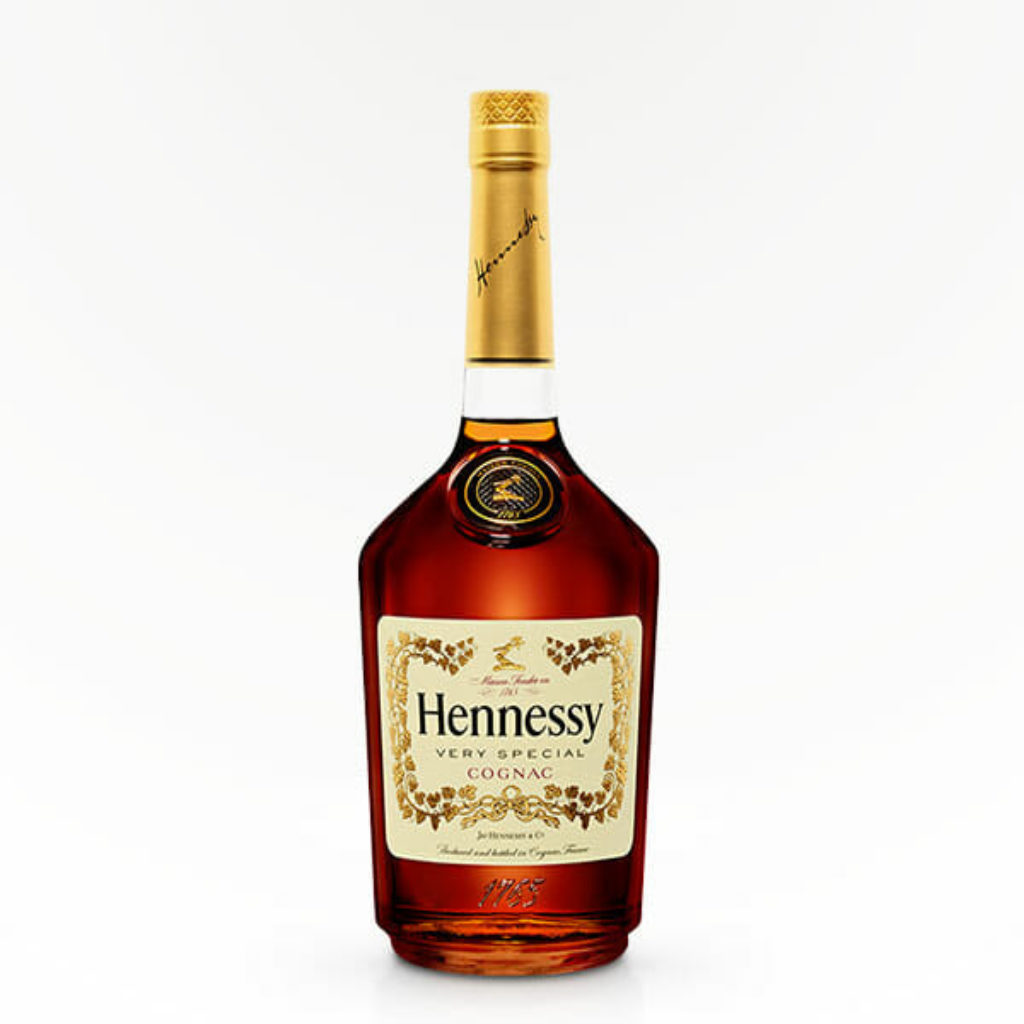
| Hennessy V.S | VS, youngest eau-de-vie at least 2 years | 40%* | 50 mL to 1.75 L | Matured in new oak barrels (hennessy.com) |
| Hennessy V.S.O.P Privilège | VSOP, at least 4 years | 40%* | 50 mL to 1.75 L | Blend commissioned in 1817 by the future King George IV (hennessy.com) |
| Hennessy X.O | XO, at least 10 years | 40%* | 375 mL, 750 mL, 1 L | Created 1870 by Maurice Hennessy; decanter designed 1947 |
| Hennessy Paradis | No age statement, above XO | 40%* | 50 mL, 750 mL, 1.5 L, 3 L | Created 1979 by Maurice Fillioux |
| Richard Hennessy | No age statement, top of range | 40%* | 700 or 750 mL decanter | Bottled at no more than 12 barrels a year (hennessy.com) |
| Hennessy Black | No age statement (legally at least VS tier) | 43% | 375 mL, 750 mL, 1 L | Launched 2009; sold only in the United States |
| Master Blender’s Selection No. 5 | At least 7 years (producer statement) | 43% | 750 mL | Single batch, May 15, 2024, US limited release |
| Hennessy Pure White | No age statement | 40%* | 700 mL | 1998; US duty-free and travel retail only |
| Hennessy X.X.O | XXO, at least 14 years | 40%* | 1 L | 2018; travel retail |
Standard drinks and calories
NIAAA defines a standard drink as 0.6 fl oz (14 g) of pure alcohol, which is a 1.5 oz pour of a 40 percent spirit. Hennessy at 40 percent is exactly that. The formula for any pour is (fluid ounces x ABV) / 0.6. USDA FoodData Central has no cognac entry; the calorie figures use USDA’s generic 80 proof distilled spirits entry (FDC 174815, 231 kcal per 100 g), which is the right basis for an unsweetened 40 percent spirit and close for cognac, where any added sugar is capped at 2.5 percent.
| Serve | Pure alcohol | Standard drinks | Calories (USDA basis) |
|---|---|---|---|
| 1.5 oz Hennessy V.S, V.S.O.P or X.O (40%) | 0.60 oz | 1.0 | About 97 |
| 1.5 oz Hennessy Black (43%) | 0.65 oz | 1.08 | About 104 |
| 2 oz pour at 40% | 0.80 oz | 1.33 | About 129 |
| Hennessy Ginger (1.5 oz V.S plus 3.5 oz ginger ale) | 0.60 oz | 1.0 | 97 plus the ginger ale |
| 750 mL bottle at 40% | 10.1 oz (300 mL) | 16.9 | About 1,640 |
How Hennessy says to serve it
These are the producer’s own suggestions from hennessy.com, not ours. V.S is positioned for cocktails; the house recipe is Hennessy Ginger, 1.5 oz V.S with 3.5 oz ginger ale and a lime wedge in a balloon glass over ice. V.S.O.P is described as for drinking “neat, on ice, on the rocks or in a sublime range of long drinks and cocktails,” and Hennessy’s Horse’s Neck is 1.5 oz V.S.O.P, four dashes of Angostura bitters, 4.5 oz ginger ale and a lemon peel. X.O gets three ice serves on its page: “On 3 rocks, On a rock, Over Ice.” Black is described as “perfect for cocktails,” and Pure White is “served over ice with fresh fruit juice/nectar.” Hennessy’s myth page adds that warming a snifter over a flame is unnecessary; cupping the glass in your hand does the job.
Hennessy vs whiskey
People confuse the two because they look alike in the glass and are served the same ways. The difference is the raw material, and the law draws the line. Cognac is distilled from grapes (brandy, 27 CFR 5.145); whisky is “distilled from a fermented mash of grain” (27 CFR 5.143), whether barley, corn, rye or wheat. Cognac must be made in one region of France; whiskey is made all over the world, and its regional styles (Scotch, bourbon, Irish, Japanese) are separate categories with their own rules. Both are bottled at a minimum of 40 percent in the US.
Who owns Hennessy
Hennessy merged with Moët and Chandon in 1971 to form Moët Hennessy, which merged with Louis Vuitton in 1987 to create LVMH. Moët Hennessy is today’s wines and spirits division of LVMH, and it has an unusual second shareholder: Diageo owns 34 percent of it, a stake that Guinness took in 1994 and Diageo inherited in the 1997 Guinness and Grand Metropolitan merger. In January 2025 Diageo said it had “no intention to sell.” So Hennessy is 66 percent LVMH and 34 percent Diageo, which puts the world’s largest cognac inside the same company as Moët champagne.
How big Hennessy is
Hennessy is most of the cognac category. The BNIC reported 141 million bottles of cognac shipped worldwide in 2025, down 15.1 percent from 166 million in 2024, with North America taking 56.9 million bottles, 40 percent of the world total. The Spirits Business’s Brand Champions report put Hennessy at 5.8 million 9-liter cases in 2025 (6.3 million in 2024). Converting cases to 700 mL bottles, 5.8 million cases is about 52 million liters against the BNIC’s 99 million liters shipped, roughly 53 percent; on 2024 figures it is about 49 percent. Those two data sets count bottles on different bases, so the fair statement is that Hennessy is roughly half of all cognac. Hennessy itself says 99 percent of its production is exported, to more than 160 countries.
| Cognac shipments (BNIC) | 2024 | 2025 |
|---|---|---|
| World, bottles | 166.0 million | 141.0 million (down 15.1%) |
| World, value | About 3.0 billion euros | 2.24 billion euros (down 25.3%) |
| North America, bottles | 70.6 million | 56.9 million (down 19.4%) |
| Far East, bottles | 47.5 million | 37.7 million (down 20.5%) |
| Europe, bottles | 31.6 million | 28.2 million |
Two trade measures weigh on the category. China opened an anti-dumping investigation into EU brandy on January 5, 2024, imposed provisional duties that October, and confirmed final duties of 27.7 to 34.9 percent from July 5, 2025 for five years, with price-undertaking exemptions for Hennessy, Rémy Cointreau and Pernod Ricard (Martell). The United States applied a 15 percent tariff to EU spirits, cognac included, from August 1, 2025, and as of July 2026 the EU was still seeking its removal.
A short history
| Date | Event |
|---|---|
| 1724 | Richard Hennessy is born in Ireland |
| 1765 | After serving in the French army, he founds a trading house in Cognac |
| 1794 | First barrels shipped to the United States (per Hennessy) |
| 1817 | The V.S.O.P blend is commissioned by the future King George IV |
| 1859 | First cases exported to China |
| 1860 | A quarter of all cognac exports carry the Hennessy name (per Hennessy) |
| 1870 | Maurice Hennessy creates Hennessy X.O |
| 1947 | The X.O decanter is designed by Gérald de Geoffre |
| 1967 | One million cases shipped in a year; two million by 1987 |
| 1971 | Moët and Chandon and Hennessy merge to form Moët Hennessy |
| 1979 | Paradis is created by Maurice Fillioux |
| 1987 | Moët Hennessy and Louis Vuitton merge to form LVMH |
| 1994 to 1997 | Guinness takes a direct 34 percent of Moët Hennessy; Diageo inherits it in 1997 |
| 1998 | Hennessy Pure White |
| 2009 | Hennessy Black, for the US market |
| 2018 | The XO minimum rises to 10 years; Hennessy releases the first XXO |
| 2025 | China’s final duties on EU brandy take effect (Hennessy exempted under a price undertaking); US 15 percent tariff on EU spirits begins |
Frequently asked questions
Is Hennessy a whiskey? No. Hennessy is cognac, a brandy distilled from grapes. Whiskey is distilled from grain.
Is Hennessy a brandy? Yes. Cognac is brandy made in the Cognac region of France under French rules; all cognac is brandy, but most brandy is not cognac.
What proof is Hennessy? 80 proof (40 percent) for V.S, V.S.O.P, X.O, Paradis and Richard Hennessy; 86 proof (43 percent) for Hennessy Black and the Master Blender’s Selection bottlings.
What does VS, VSOP and XO mean on Hennessy? The minimum age of the youngest eau-de-vie in the blend: 2 years for VS, 4 for VSOP, 10 for XO (raised from 6 in 2018).
Where is Hennessy made? In Cognac, France, by Jas Hennessy and Co., owned by Moët Hennessy (LVMH and Diageo).
How many standard drinks are in a shot of Hennessy? One, for a 1.5 oz pour at 40 percent. A 750 mL bottle is 16.9.
Does Hennessy go bad? Cognac does not age or improve in the bottle, per Hennessy, and an unopened bottle keeps.
Sources
- 27 CFR 5.145, Brandy, including the Cognac type (eCFR), 27 CFR 5.155, Coloring, flavoring and blending materials and 27 CFR 5.143, Whisky, checked September 13, 2026
- Hennessy product pages: V.S, V.S.O.P, X.O, Paradis, Richard Hennessy, Black, Pure White, checked September 13, 2026
- Hennessy Ginger, Hennessy Horse’s Neck and Busting six myths about Hennessy cognac, checked September 13, 2026
- Hennessy, 260 years of history and Hennessy press, Maison Hennessy, checked September 13, 2026
- PR Newswire, Hennessy Master Blender’s Selection No. 5 (May 15, 2024), checked September 13, 2026
- Difford’s Guide, Cognac age classifications, Martell, What do VS, VSOP, XO and XXO mean, The Spirits Business, XO classification increases to 10 years (January 12, 2018) and Difford’s Guide, Armagnac distillation, checked September 13, 2026
- The Spirits Business, Diageo: no intention to sell Moët Hennessy stake (January 2025) and Encyclopedia.com, Diageo plc history, checked September 13, 2026
- The Spirits Business, Cognac exports to North America slide 34% (March 2026), Just Drinks, Cognac export slide 2025 (March 5, 2026), The Spirits Business, Cognac exports 2024 (February 7, 2025) and The Spirits Business, Brand Champions brandy and cognac (June 19, 2026), checked September 13, 2026
- Just Drinks, China confirms duties on EU brandy (July 4, 2025), WTO dispute DS631, DISCUS statement on the 15% tariff on EU spirits and Vinetur, EU seeks US tariff relief (July 21, 2026), checked September 13, 2026
- NIAAA, What is a standard drink and USDA FoodData Central, distilled spirits 80 proof (FDC 174815), checked September 13, 2026
- Retailer listings, used only for ABV and sizes: Flaviar, Total Wine (Master Blender’s Selection No. 5) and Difford’s Guide (Paradis), checked September 13, 2026
Saucey carries Hennessy V.S, Black, V.S.O.P and X.O in most of the cities we serve, with delivery in as fast as 25 mins. Browse Hennessy on Saucey, and for the wider category read our guides to spirits.
The fine print
What is available depends on your address. Enter it and we will show you what is in stock nearby: beer, wine, spirits, mixers and snacks. Delivery is $4.99, plus applicable taxes and fees, shown before you order, as fast as 25 minutes in the best case. Alcohol is 21 and up. ID at the door, every time, no exceptions and no negotiating with the driver.